Scientific research in the Department of Earth, Atmosphere, and Climate spans four themes. Together, we tackle regional and global challenges with interdisciplinary and quantitative approaches. Our innovative research is funded by prestigious national grants from the National Science Foundation, National Aeronautics and Space Administration, Department of Energy, National Oceanic and Atmospheric Administration, among others. Our work is connected to campus, national, and international facilities and resources. Our graduate program fosters a rigorous and vibrant community for students of all backgrounds to advance their scientific training.

Undergraduate research

ISU aspires to be the most student-centered university, and in EAC, students can engage in research with faculty. Research gives students hands-on opportunities to apply their learning to real-world problems. Research experiences occur in departmental labs, using computing resources, or through fieldwork. These experiences are central to shaping students into independent thinkers who are experienced at communicating their ideas and results.

Undergraduate students regularly present their research projects at ISU research symposia and regional or national conferences. Several have won awards for their presentations and have also been co-authors on datasets and journal publications.

Undergraduate research can be used to earn credits through independent studies, or students can tap into departmental resources, such as the Geology Undergraduate Research Grant (GeoURG), which provides up to $2500 for hourly wages and research expenses. The College of Liberal Arts and Sciences supports undergraduate research through the Dean’s High Impact award, and students regularly receive scholarships from the Iowa Space Grant Consortium and the Water Resilience Collaborative. Weekly departmental newsletters highlight external research opportunities available to students
Research themes

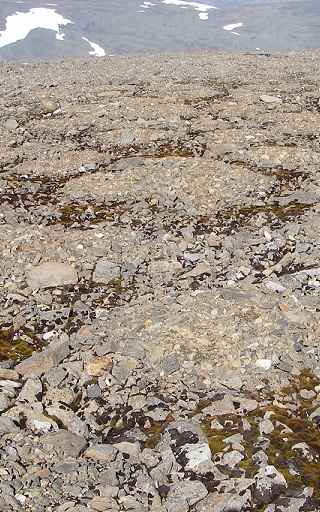
  • Patterned ground in Swedish mountains

    Earth and Environmental System Processes

    Explore the Earth as a series of interconnected systems, encompassing geological deformation, earthquakes and dynamics, co-evolution of Earth and life, and Earth system evolution.

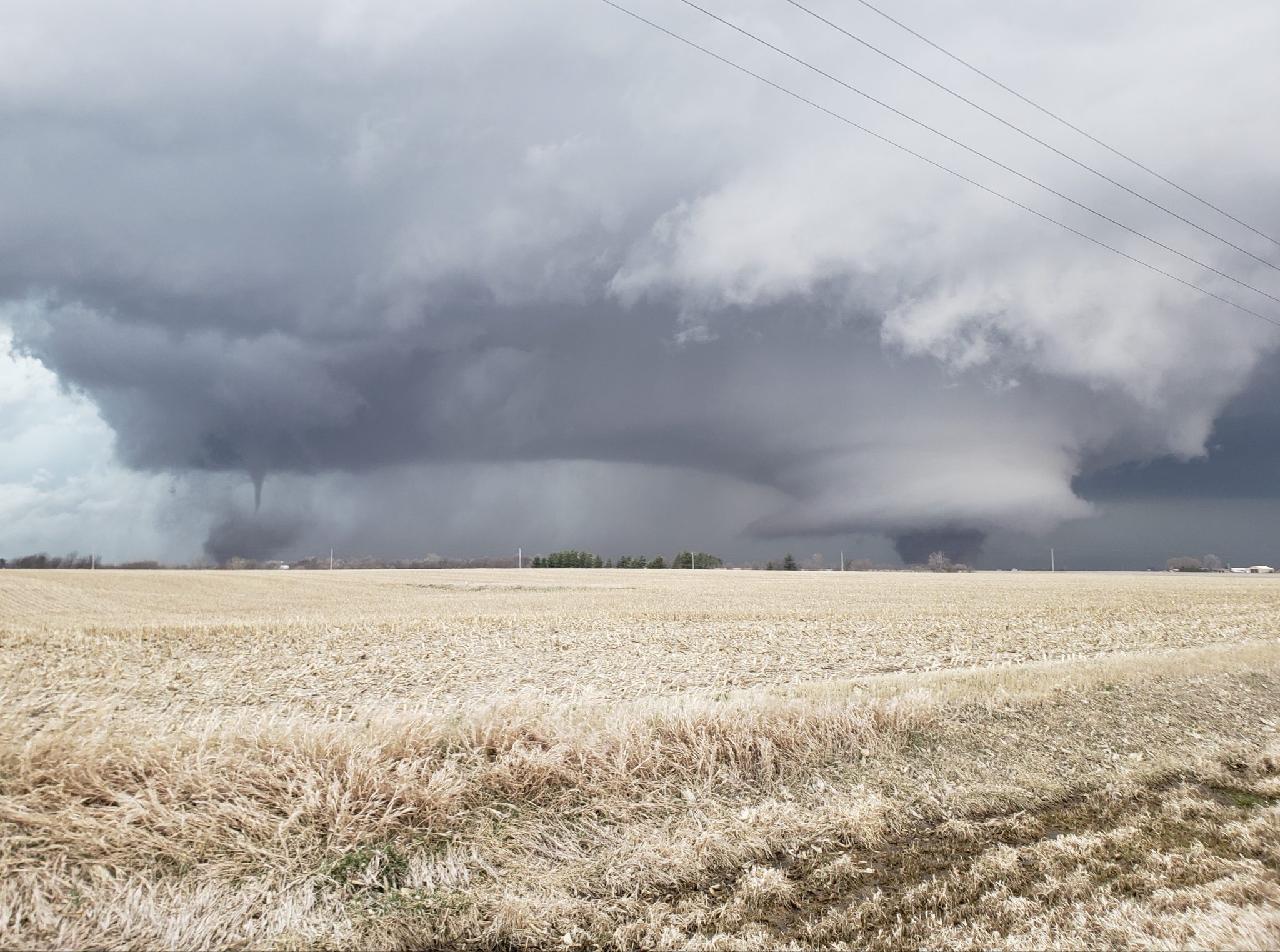
  • Meteorology and Atmospheric Science

    Use quantitative approaches to analyze and predict weather on time scales from the next hour to seasons ahead via numerical, analytical, and artificial intelligence modeling, and data assimilation.

  • field of corn in a drought

    Climate: Past, Present, and Future

    Understand the hydrologic variability, reconstructing past climate variability, atmosphere-ocean interactions, and land-atmosphere interactions.

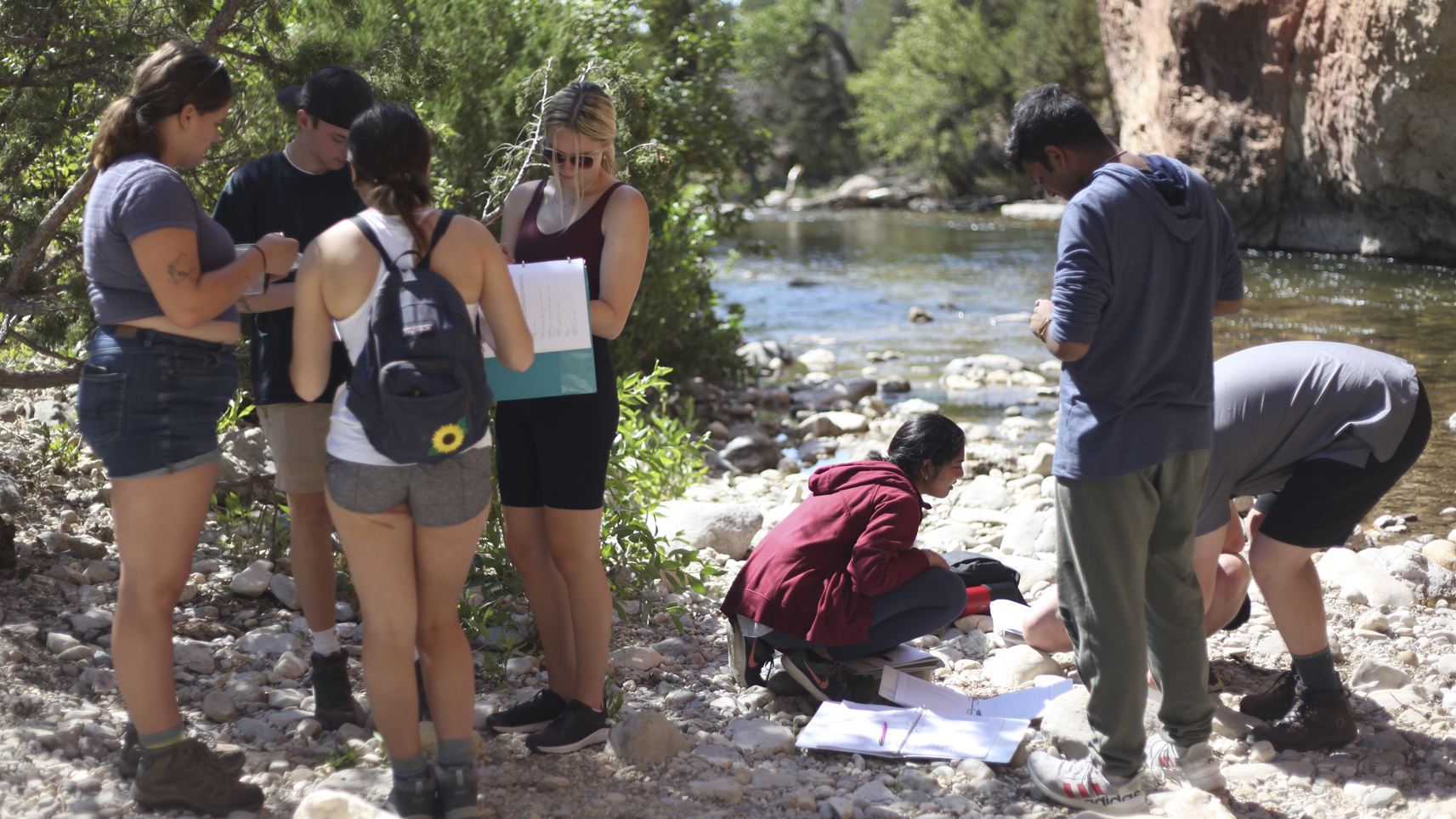
  • students taking water samples

    Geoscience Concepts

    Communicate and teach concepts in the above three themes using teaching as research.

Research facilities and resources

Our department laboratories are located in Agronomy and Science Halls, and we maintain a field station in the Bighorn Basin, Wyoming.

Facilities

Our faculty and students additionally use facilities across the ISU campus, including:

  • EaSEL: The Earth System Evolution Lab houses equipment for measuring C, N, S, O and H isotopes, and an elemental analyzer, shatterbox, and magnetic separator.
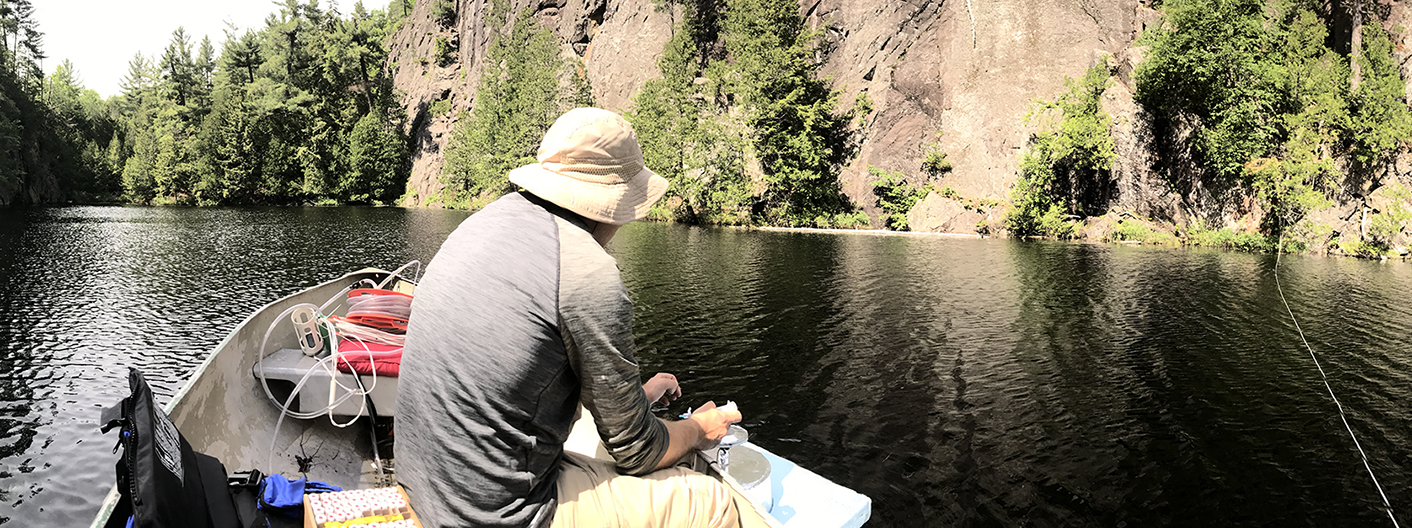
  • Geobiochem: The Geobiochem group maintains equipment for sampling lakes, photosynthesis research, anoxic work, microbiology, and trace element geochemistry. This includes a 100% N2 glovebox, polypropylene fume hood, laminar flow hood, Leica fluorescence microscope, plate reader, PCR machine, Widdel flasks, groundwater pumps, van Dorn sampler, gravity corer, a YSI ProDSS, LiCOR spherical quantum sensor, Fluoroprobe, Phyto-PAM II, and a vacuum embedder.
  • ISU ADVANCE Midwest Partnership
  • ISU Geology Field Station: Situated on the western flank of the BIg Horn Mountains, the fully modernized Carl F. Vondra Geology Field Station provides the ideal setting for field courses, workshops, and retreats.
  • High Performance Computing: ISU’s High Performance Computing facility provides access to petascale systems that support large-scale computing needs for scientific and instructional endeavors at Iowa State University. In addition to centralized HPC resources, EAC maintains a Linux cluster and data storage system.
  • SIPERG: The Stable Isotope Lab of the Stable Isotope Paleo Environments Research Group provides a variety of isotopic analytical services to both on-campus and off-campus researchers and institutions.
  • Structure Lab: The structure lab focuses on physical modeling in the geosciences and hosts multiple shear tables and a ring shear setup used to deform and characterize rock analogs.
  • VRAC: ISU’s Virtual Reality Application Center supports research on human-computer interactions in multiple learning contexts with an impressive array of high-powered, immersive VR facilities.

Instruments available for research

The Department also houses several instruments for use by EAC faculty and students:

  • Petrographic and stereomicroscopes with image-analysis capabilities
  • An electron microprobe, X-ray diffraction unit, and various SEMs on campus
    Ion microprobes, laser ablation ICP-MS, TIMS, and other state-of-the-art instrumentation through collaborators at various institutions
  • Computer equipment and software for high-end mapping and visualization
  • Field geophysical equipment for high-resolution subsurface investigations: a 24-channel seismic-acquisition unit, a multi-electrode resistivity imaging system, and a ground-penetrating radar
  • A Mastersizer 3000 Particle Size Analyzer for determining fine sediment grain size.
    Water-level tapes, peristaltic and submersible pumps, stream velocity meters, acoustic doppler current profiler, and infiltrometers
  • Rock saws, jaw crusher, disc mill, and drill presses