
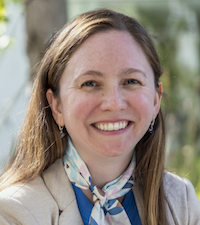
 Dr. Christina Patricola, a new GEAT assistant professor starting in Fall 2020, recently won a Department of Energy Early Career Award for her research on tropical cyclones.
Tropical cyclones are low-pressure systems that form over tropical waters with thunderstorms near the center of closed, cyclonic winds. When those rotating winds reach 39 mph, the system becomes a named tropical storm. At 74 mph, it becomes a hurricane in the Atlantic or East Pacific oceans, a typhoon in the northern West Pacific.
Despite their destruction and enormous costs, Patricola said grand challenges remain in tropical cyclone studies. For example: There’s no consensus on whether global storm numbers will change in the future and there’s uncertainty about any regional changes in tropical cyclone intensity and rainfall.
Excerpts from ISU News Service. The full story can be found here.